
Resonance Through a Dancer’s Language
The architecture of quiet, cross-species communication
Presented at the 64th World Congress of Dance Research, Athens, July 2026.
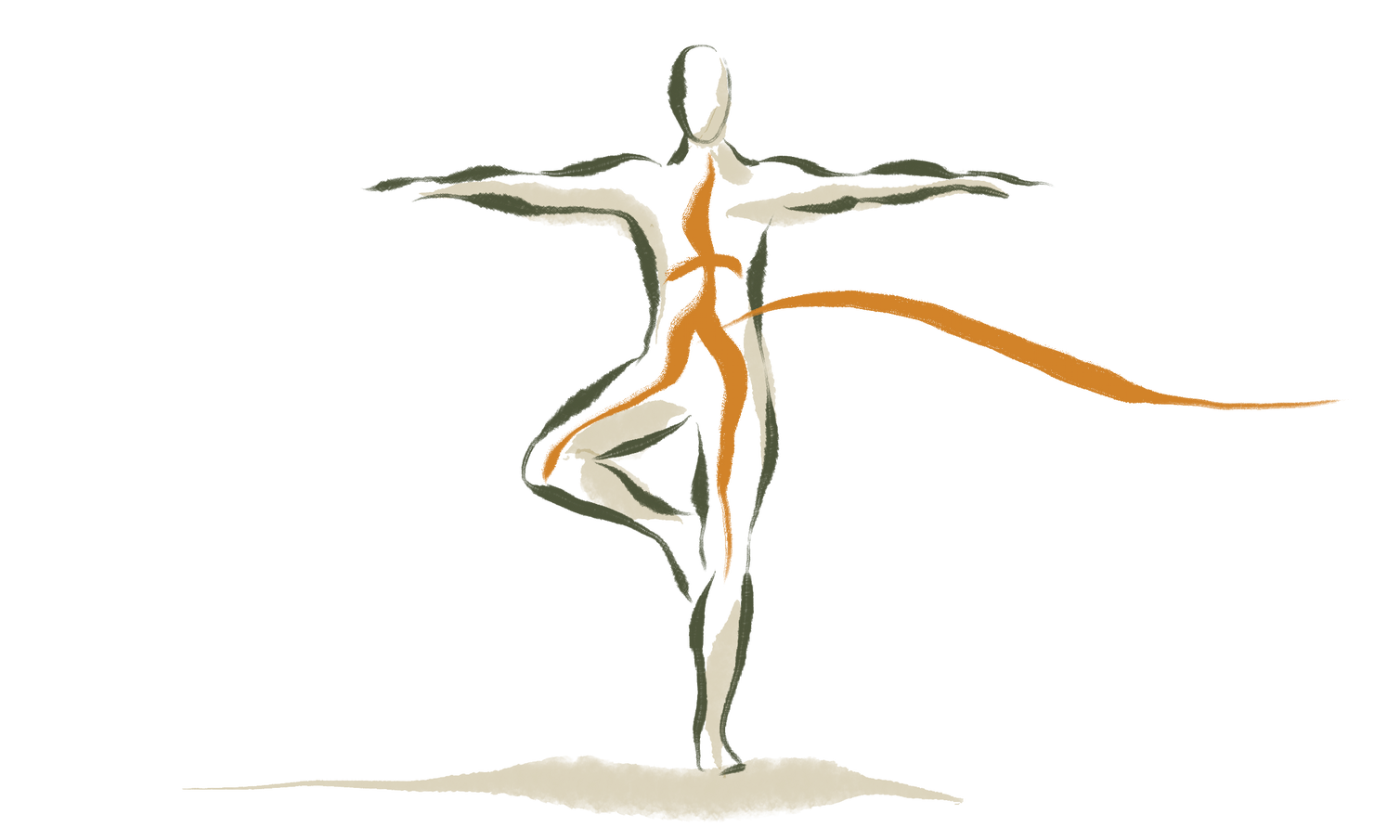
Cultivating the "Dancer’s Scan"
True lightness begins when the human body becomes clear and quiet enough for the horse to accurately read. We use conscious, off-horse movement to clear our own tension before we ever ask the horse to move.
We don't force compliance; we awaken memory. Lightness is not a posture you maintain—it is an internal resonance you remember.
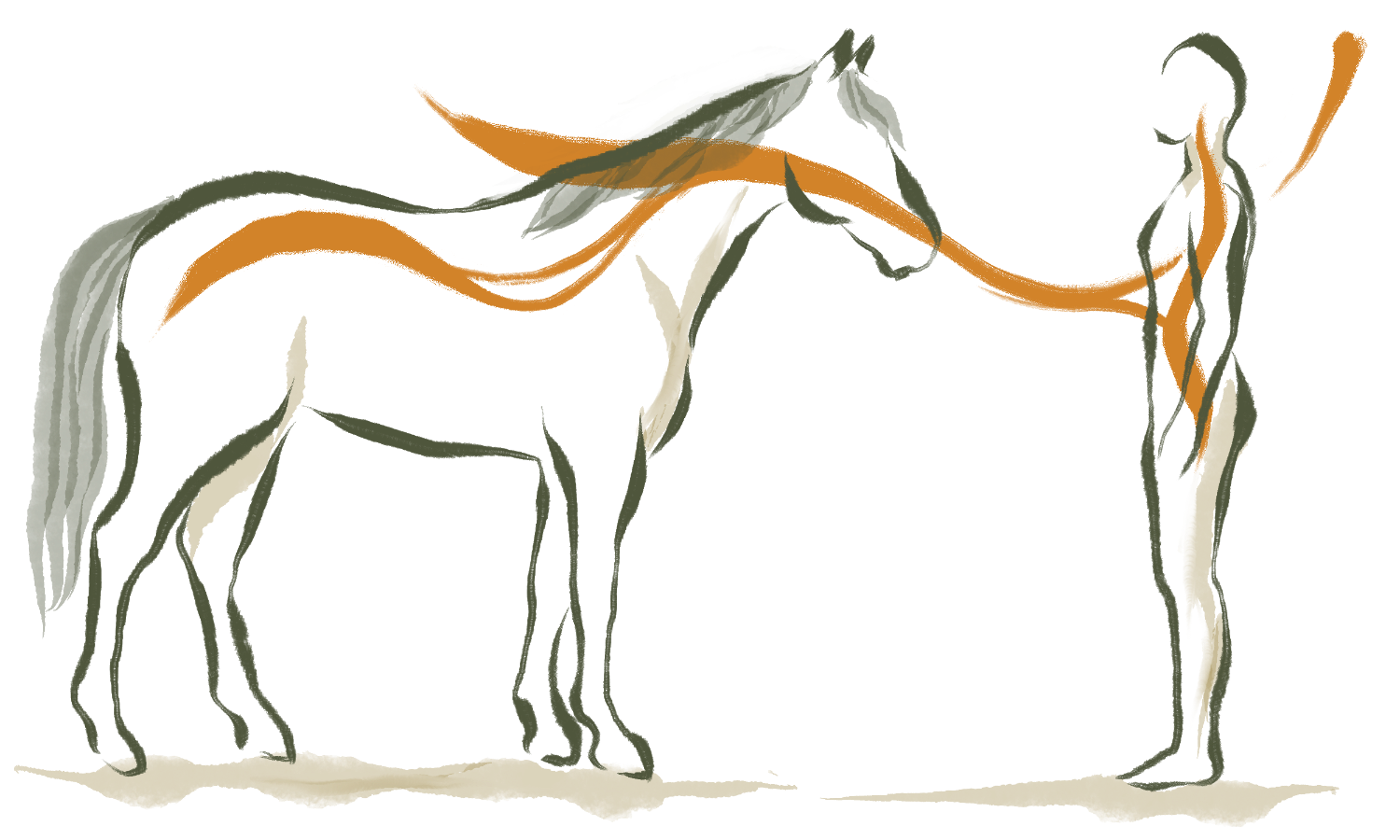
Interspecies Mirroring
A horse reflects the neuromuscular reality of the human standing before them. When we let go of rigid posturing and return to our own skeletal alignment, we provide a quiet, stable frequency.
Movement is not commanded; it is shared. Through a state of mutual self-sensing, we step out of defensive habituation and into a restored equilibrium.
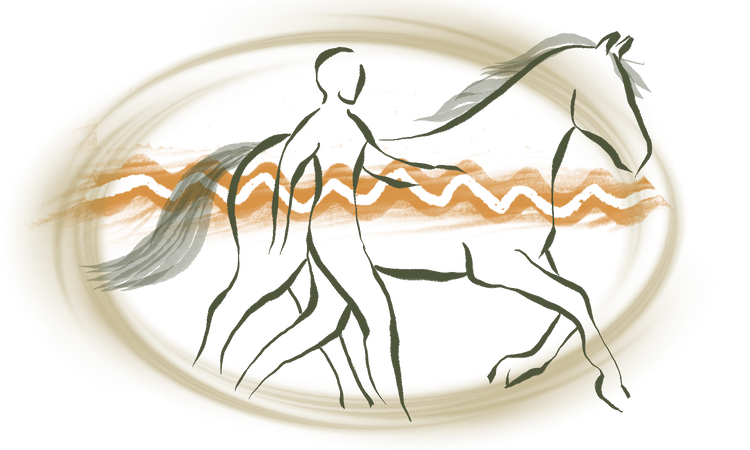
Auditory-Motor Entrainment
True biological symmetry requires a shared temporal foundation. By introducing a predictable 110 BPM rhythmic template, we create a stabilising shield that standardises the allocation of our attention.
Rhythm is the architecture of presence. When the human body aligns to a steady, internal cadence, the equine nervous system can drop its defensive alertness and entrain to a shared state of ease.
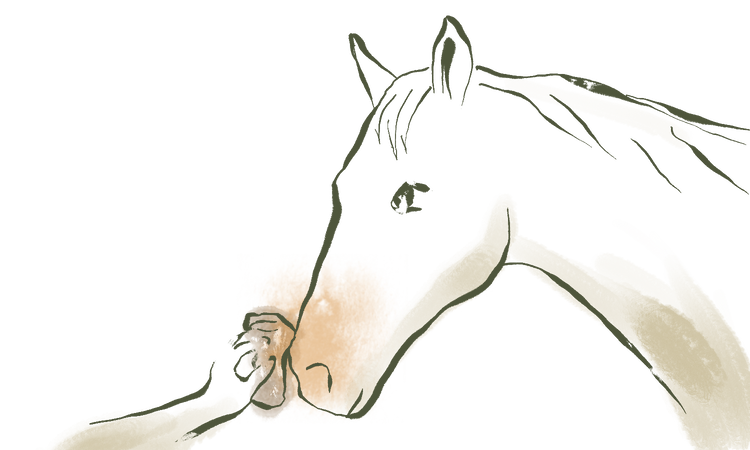
The Neurological Handshake
In traditional behavioural conditioning frameworks, grooming is treated as a purely mechanical chore or a tool for behavioural compliance. From a somatic perspective, however, the pre-session grooming routine functions as the initial neurological handshake between handler and horse.
Honouring a horse's somatic and sensory boundaries before work begins creates an immediate baseline tone of safety. This small act of empathy clears environmental static, allowing a parasympathetic cascade that ripples through the rest of the day—manifesting as greater biomechanical freedom in the arena and unshakeable trust in high-alert environments.